Blackwall Tunnel Charge And Silvertown Complete Guide
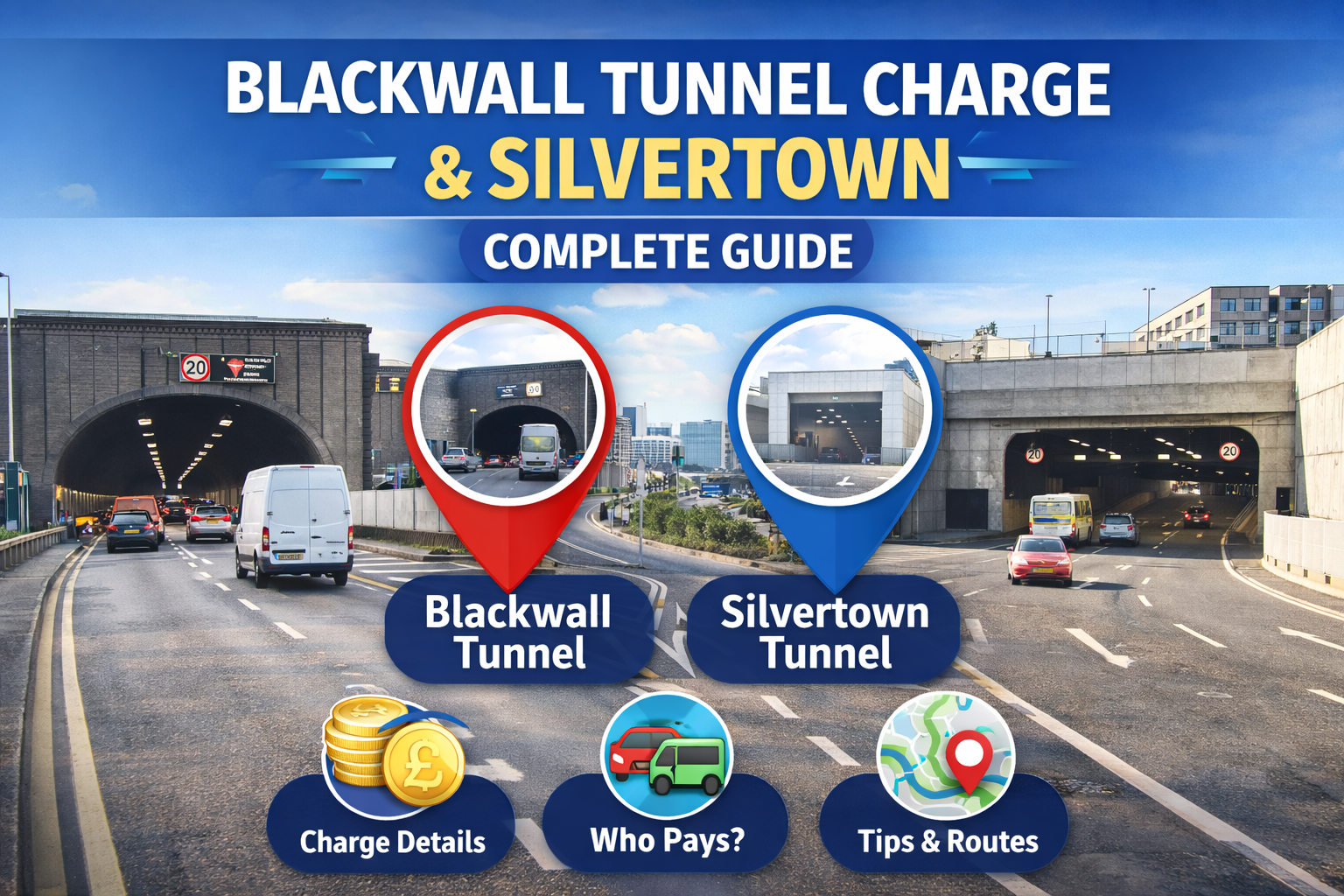
Blackwall Tunnel Charge & Silvertown Tunnel Complete Guide (2026)
If you’re driving in East London and planning to use the Blackwall Tunnel charge or Silvertown Tunnel, this guide explains everything you need to know.
From toll charges, how to pay, peak times, exemptions, to traffic tips, this complete guide will help you navigate both tunnels smoothly and save money where possible.
What Are the Blackwall and Silvertown Tunnels?
The Blackwall Tunnel is one of London’s oldest tunnels under the River Thames.
It connects the A2 in south London to the A12 in east London and has been a major route for drivers for over a century. It is known for heavy traffic, especially during rush hours.
The Silvertown Tunnel is a newer addition, opening in 2025 just east of Blackwall. It was built to reduce congestion at the Blackwall Tunnel and improve traffic flow across the river.
Both tunnels now have toll charges, which were introduced to help manage traffic and maintain infrastructure.
Why Are There Toll Charges?
Toll charges were introduced to:
Manage traffic and reduce congestion during peak hours.
Cover the costs of building the Silvertown Tunnel and maintaining both tunnels.
Encourage drivers to travel outside peak periods or use public transport alternatives.
These tolls apply to almost all vehicles crossing the river, with some exemptions for eligible vehicles.
Current Toll Charges (2026)
The toll charges for vehicles vary depending on vehicle type and time of day. Charges are higher during peak hours and lower off-peak.
Toll Charges for Different Vehicles
Vehicle Type | Off-Peak Charge (06:00–22:00) | Peak Charge (06:00–10:00 / 16:00–19:00 Mon–Fri) | Pay by Phone/Online |
Motorcycles, mopeds, trikes | £1.50 | £2.50 | £2.50 |
Cars & small vans | £1.50 | £4.00 | £4.00 |
Large vans | £2.50 | £6.50 | £6.50 |
Heavy Goods Vehicles | £5.00 | £10.00 | £10.00 |
No tolls are charged between 22:00 and 06:00 daily, making overnight travel free.
Peak Hours Explained
Peak hours are the busiest times for traffic and are when toll charges are higher:
Northbound (towards east London): 06:00 – 10:00, Monday to Friday
Southbound (towards south London): 16:00 – 19:00, Monday to Friday
During peak hours, a car can be charged up to £4 per journey, while large vans or heavy goods vehicles can pay much more. Off-peak charges are significantly cheaper.
How to Pay the Tunnel Toll
There are no cash booths at the tunnels. All payments are electronic.
1. Auto Pay (Recommended)
Auto Pay is the easiest and cheapest way to pay the toll. Your vehicle is registered with the system, and charges are automatically deducted.
Off-peak rates are applied automatically, helping you save money. You receive a monthly statement for all journeys.
2. Pay by Phone or Online
If you don’t use Auto Pay, you must pay the toll within three days of using the tunnel. You can do this by phone or online using your vehicle registration.
Paying promptly avoids fines and ensures a hassle-free journey.
Penalty Charges for Non-Payment
Failure to pay the toll can result in a Penalty Charge Notice (PCN):
Standard fine: £180
Reduced fine if paid within 14 days: £90
Only one penalty is issued per day even if you make multiple unpaid crossings. Paying promptly is essential to avoid fines.
Exemptions & Discounts
Certain vehicles are exempt from paying tolls:
Buses and coaches
Black cabs
Zero-emission capable private hire vehicles
Vehicles registered for disabled access (with proof)
Discounts
Some drivers qualify for discounted tolls:
Low-income Londoners: Residents receiving certain benefits may be eligible for 50% off the charge.
Small businesses and charities: Some local businesses and charities may apply for discounts for up to three vehicles.
Exemptions and discounts must be registered with the tunnel payment system in advance. They are not automatically applied.
Cyclists & Public Transport
Cyclists cannot ride through the tunnels for safety reasons. Instead, free shuttle services are available for cyclists.
Many bus routes, the Docklands Light Railway (DLR), and nearby London Underground stations provide convenient alternatives to avoid tunnel charges entirely.
Traffic & Journey Tips
1. Expect Congestion During Peak Hours
The Blackwall Tunnel remains busy, particularly northbound in the morning and southbound in the evening. Planning your journey carefully can help avoid delays.
2. Travel Off-Peak When Possible
Travel outside peak hours or overnight (22:00–06:00) when no tolls apply. This not only saves money but often provides a faster, smoother journey.
3. Use Auto Pay
Auto Pay ensures lower off-peak rates, avoids forgetting to pay, and simplifies monthly billing. It is the most convenient way to manage your toll payments.
4. Explore Public Transport
Using public transport such as buses, DLR, or the London Underground may be faster and cheaper during busy periods. It is often more convenient for regular commuters.
Common Questions (FAQs)
Do I pay every time I use the tunnel?
Yes. Tolls are charged for every crossing and apply in both directions during the charging hours.
Can I avoid tolls completely?
Only by traveling between 22:00 and 06:00 or by using public transport alternatives.
Does ULEZ or Congestion Charge apply?
Yes. If your vehicle enters the applicable ULEZ or Congestion Charge zones, you may need to pay additional fees.
Will tunnel charges increase in the future?
Toll rates are reviewed periodically and may be adjusted in the future. Always check for updates before planning your journey.
Quick Summary
Toll charges started for both tunnels in April 2025.
Peak charges: Up to £4 for cars, £6.50 for vans, and £10 for HGVs.
Off-peak charges: £1.50–£5 depending on vehicle type.
No tolls between 22:00–06:00 daily.
Auto Pay is recommended for convenience and lower charges.
Discounts and exemptions are available but must be registered.
Final Thoughts
The introduction of tolls at Blackwall and Silvertown tunnels is a major change for drivers in East London. It aims to reduce congestion, fund infrastructure, and encourage smarter travel choices.
By understanding toll charges, peak times, exemptions, and payment options, you can save money, avoid fines, and plan a smooth journey across the river.
Whether you are a local resident, occasional visitor, or professional driver, this guide helps you navigate both tunnels confidently and efficiently.
Plan your travel wisely, use Auto Pay, consider off-peak travel, or use public transport for the best experience.